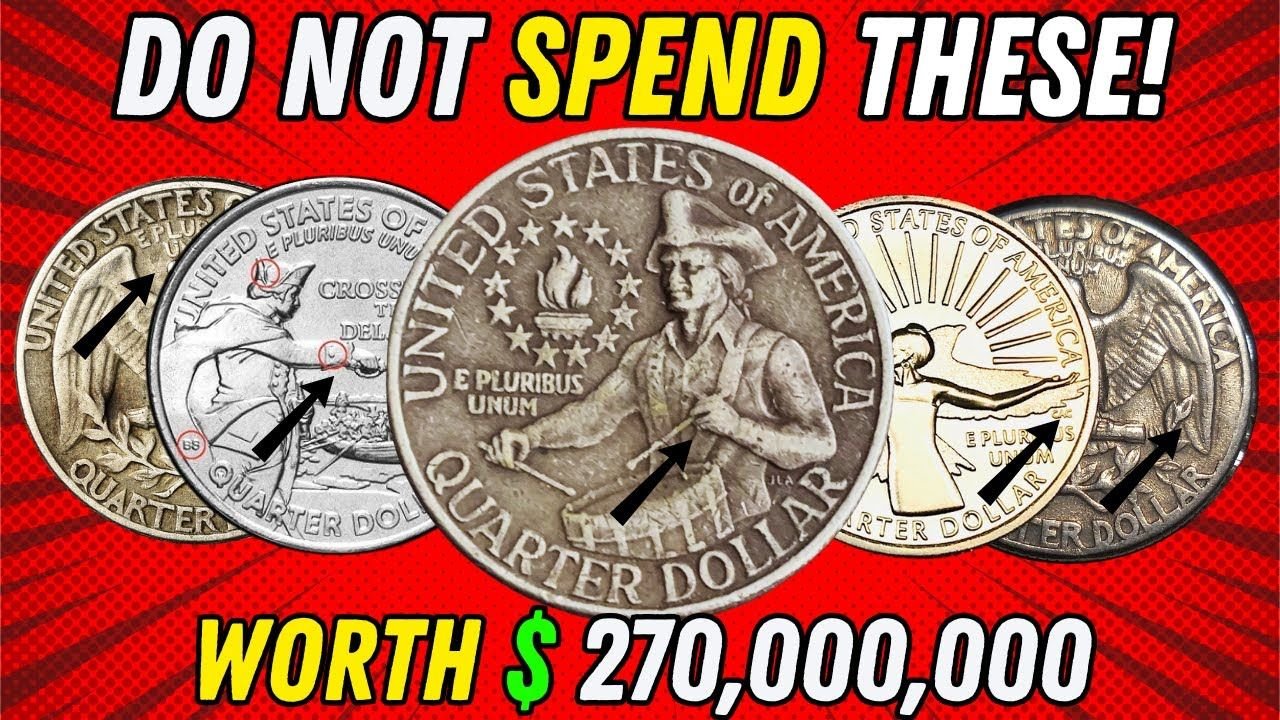
The rise of state quarters: The U.S. Mint’s 50 State Quarters Program, which ran from 1999 to 2008 (with the final coins released in 2009), was a remarkable public engagement project that reinvigorated coin collecting across America. By featuring unique, state-specific designs on the reverse of the quarter, the program wove a tapestry of national heritage into everyday commerce. For over a decade, people from all walks of life found themselves checking their change, not just for spending money, but for a piece of history. This initiative demonstrated how currency could serve as a canvas for storytelling, fostering a shared sense of discovery and learning that reached far beyond the traditional numismatic community.
What Made the State Quarters So Captivating?
The program’s genius lay in its democratic and educational approach. For the first time, the nation’s currency became a rotating gallery of local pride and national history. Each quarter’s design was the result of a process involving state officials, historians, and citizens, often chosen from public submissions. This created a personal investment; people weren’t just collecting coins, they were collecting symbols of their home or places meaningful to them. The slow, steady release—five states per year in the order they ratified the Constitution or joined the Union—turned collecting into a patient, year-by-year pursuit. It was a hobby accessible to anyone with a pocket and some curiosity, making numismatics a popular pastime for families, students, and new collectors.
State Quarters Value Reference Table
| Category | Description & Key Characteristics | Typical Value Range (2025) | Collectibility Insight |
|---|---|---|---|
| Circulated Coins | Coins used in daily transactions, showing signs of wear (scratches, loss of luster, softened details). | Face value ($0.25) | Common; valued for completing a basic collection but not for premium worth. |
| Uncirculated (Mint State) Coins | Coins never released for commerce, retaining their original mint finish with full luster and sharp, flawless details. | $1 to $5+ | Desirable for serious collectors; value depends on the specific state and mint mark (P, D). |
| Silver Proof Quarters | Special collector editions struck on 90% silver planchets with a mirror-like “proof” finish. Issued by the San Francisco Mint (S mint mark). | $8 to $40+ | Highly sought-after for precious metal content and superior beauty. Complete silver proof sets are a premium collection. |
| Error Coins | Mis-struck coins featuring notable minting errors, such as broadstrikes, off-center strikes, or dramatic doubling. | $50 to $1,000+ | Value is highly variable and depends on the severity and visibility of the error. Authenticated errors command the highest prices. |
| Complete 50-State Sets | A full collection of all 56 quarters (50 states + 6 territories from the later DC & Territories program) in matched condition. | $15 to $300+ | Value scales with condition (circulated vs. uncirculated) and presentation. A set in original government packaging holds a premium. |
A Guide to State Quarter Values and Collectibility
While billions of quarters entered circulation, their collectible value varies dramatically based on condition, composition, and rarity. The vast majority of quarters found in everyday change are worth their face value of 25 cents. True collectible value emerges with coins that have been preserved in exceptional states or that possess unique characteristics.
Factors That Shape a Quarter’s Worth
Several key elements determine whether a state quarter is merely common change or a collectible item. Condition is paramount: a coin’s grade, from heavily worn to pristine mint state, is the primary driver of value. Mintage figures also play a role; while all were minted in the hundreds of millions, some dates and mint marks (like the 2004-D Wisconsin quarter with an extra leaf “error”) saw lower production or heightened demand. Composition separates standard copper-nickel coins from valuable 90% silver proofs. Finally, the presence of a verifiable mint error—a legitimate mistake in the striking process—can create significant scarcity and collector interest.
The Lasting Impact of a National Hobby
The State Quarters Program’s legacy is multifaceted. It succeeded in getting hundreds of millions of Americans to interact with their currency in a new way, transforming spare change into a source of education and connection. For the collecting community, it served as a powerful gateway, introducing a new generation to the hobby. The program proved so successful that it spawned follow-on initiatives: the America the Beautiful Quarters (2010-2021) and the ongoing American Women Quarters program. Ultimately, the state quarters remind us that value isn’t solely monetary; it can also be found in the stories we tell, the history we preserve, and the shared experience of looking a little closer at the ordinary objects in our hands.
Frequently Asked Questions (FAQ)
Q: I have a full jar of state quarters from change. Are they worth more than $0.25 each?
A: Most likely, no. Quarters pulled from circulation almost always carry only face value due to normal wear and tear. Their value is in the completed collection itself, not a monetary premium.
Q: What is the single most valuable state quarter?
A: While no regular circulation state quarter is worth a fortune, some error versions are highly valuable. The most famous is the 2004-D Wisconsin quarter with an extra leaf on the cornstalk. In high grades, authenticated examples can sell for over $300. For non-error coins, high-grade examples of lower-mintage issues like the 2008-D Oklahoma or Arizona quarters can be among the most valuable.
Q: What’s the difference between a “proof” and an “uncirculated” coin?
A: Uncirculated coins are business-strike coins made for general circulation but never spent. They have a bright, mint luster. Proof coins are specially made for collectors using polished dies and planchets, resulting in a mirror-like background and frosted, detailed design. They are sold directly to collectors in sets and are not released into circulation.
Q: Should I clean my old or dirty state quarters to make them more valuable?
A: Absolutely not. Cleaning a coin, even with gentle methods, will cause micro-scratches and damage the original surface (patina), dramatically reducing its value to collectors. It is always best to leave coins in their found condition.
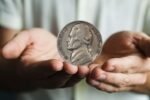
Q: Where is the best place to get my potentially valuable quarters evaluated?
A: For authentication and valuation, seek out a reputable coin dealer or a professional numismatic grading service like PCGS or NGC. Avoid pawn shops or general antique dealers for high-value items, as they may not specialize in coins.
Q: Did the program continue beyond the 50 states?
A: Yes. The success led to the “District of Columbia and U.S. Territories Quarters” in 2009, honoring D.C., Puerto Rico, Guam, American Samoa, the U.S. Virgin Islands, and the Northern Mariana Islands. These are considered part of the overall program by many collectors.
