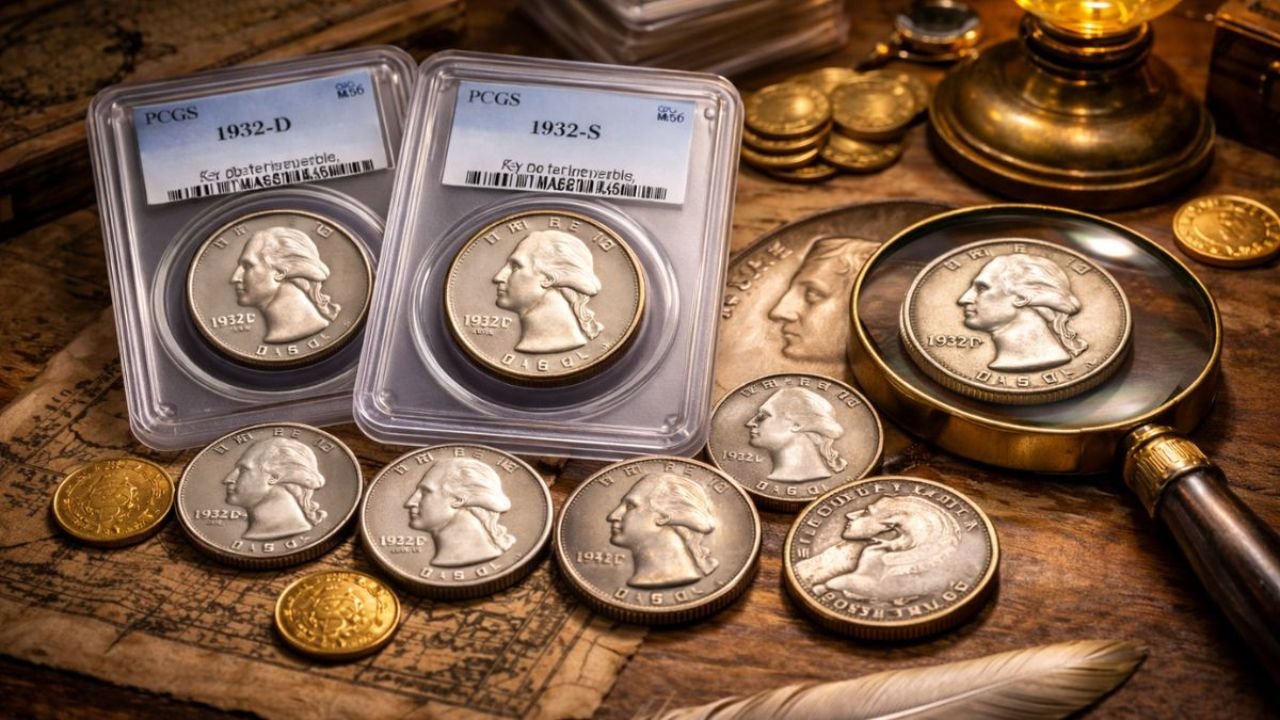
Rare Washington Quarters Worth a Fortune in 2026 : For coin enthusiasts and casual observers alike, the simple act of checking your change can sometimes feel like a miniature treasure hunt. Among the most accessible and historically rich series for collectors are Washington quarters. First minted in 1932 to commemorate the 200th anniversary of George Washington’s birth, these coins carry more than just monetary value—they are pieces of American history. While most are indeed worth just twenty-five cents, certain rare dates, mint errors, and pristine specimens have captured the attention of the collecting world, with values reaching impressive heights. This guide will explore the key quarters to look for, the stories behind their rarity, and how you might begin your own numismatic journey.
What Makes a Quarter Valuable?
The journey from face value to fortune for a coin is influenced by a blend of factors that collectors and investors carefully consider.
- Rarity and Mintage: Fundamentally, supply and demand dictate value. Quarters with a low original production number, or “mintage,” naturally have fewer survivors, especially in excellent condition. Coins from the San Francisco (S) or Denver (D) mints in certain early years are classic examples of this.
- Condition and Grade: The state of preservation is paramount. A coin that has never entered circulation (Uncirculated or Mint State) and shows no wear is exponentially more valuable than one worn smooth from decades of use. Professional grading services assess coins on a 70-point scale, with higher numbers denoting superior preservation.
- Mint Marks and Key Dates: he tiny letter on the coin indicating its origin mint (P for Philadelphia, D for Denver, S for San Francisco) can make a world of difference. Specific combinations of date and mint mark, known as “key dates,” are the cornerstones of any complete collection due to their scarcity.
- Errors and Varieties: Mistakes made during the minting process are highly coveted. These can include doubled images on the design (Doubled Die), overpunched mint marks, or coins struck on the wrong metal blank. Each error tells a unique story of the mint’s operation that day.
- Silver Content: Quarters minted from 1932 through 1964 are composed of 90% silver. This gives them an intrinsic bullion value that fluctuates with the precious metals market, providing a foundational worth beyond their collectibility.
Notable Washington Quarters A Reference Table
The table below outlines some of the most sought-after Washington quarters, with value estimates for high-grade, certified examples. Remember, values are dynamic and can vary based on auction results, market trends, and the specific grade of an individual coin.
| Year & Mint Mark | Key Characteristic | Approximate Value Range (High Grade) | The Story Behind the Value |
|---|---|---|---|
| 1932-D | Low Denver Mintage (436,800) | $10,000 – $50,000+ | The premier key date. As a first-year issue from Denver with a small output, finding one in uncirculated condition is a major numismatic event. |
| 1932-S | Low San Francisco Mintage (408,000) | $5,000 – $25,000+ | The counterpart to the 1932-D; its even lower mintage makes it exceptionally scarce, especially in top grades. |
| 1937 Doubled Die Obverse | Noticeable doubling on obverse text | $1,500 – $8,000+ | A striking mint error where the coin’s design was impressed twice, slightly offset, creating a visible ghosting effect. |
| 1950-D/S Overmintmark | “D” mint mark punched over an “S” | $2,000 – $9,500+ | A compelling mint mistake. A Denver die was used to correct a San Francisco-died coin, leaving evidence of both letters. |
| 1955 Doubled Die | Pronounced doubling on the date and legends | $2,000 – $10,000+ | One of the most dramatic and popular doubled die errors in the series, easily visible to the naked eye. |
| 1965 Transitional Error | Struck on a 90% silver planchet | Up to ~$12,500 | A rare hybrid. In 1965, the mint switched to copper-nickel, but a few coins were accidentally struck on leftover silver blanks. |
| 1943-S Doubled Die Obverse | Doubling from WWII-era dies | $1,000 – $6,500+ | A prized error from a period focused on industrial wartime production, making such mistakes a fascinating historical footnote. |
Exploring Legendary Coins in Depth
The 1932-D and 1932-S: The Founding Rarities
These two issues stand as the pillars of the Washington quarter series. Minted during the depths of the Great Depression, public demand for new coinage was low, resulting in tiny mintages. For a collector, acquiring one of these in any condition is a milestone, but examples preserved in Mint State are genuine numismatic treasures that headline auctions.
The Allure of Mint Errors Stories in Metal
Error coins like the 1937 and 1955 Doubled Dies offer a tangible connection to the minting process. They were created when a hub impressed a design onto a working die with a slight shift between strikes. Coins produced from these faulty dies then inherited the doubled image. The 1950-D/S represents a different kind of human error—a quick correction that created a permanent, collectible anomaly.
The 1965 Silver Transitional Error A Coin Out of Time
Perhaps one of the most intriguing rarities is the 1965 quarter struck on a silver planchet. With the official composition change, silver blanks should not have been present. This error is a classic “transitional” piece, a accidental holdover from the previous era, and is exceptionally rare.
The Critical Role of Grading and Authentication
To confidently buy or sell a rare coin, third-party verification is essential. Services like the Professional Coin Grading Service (PCGS) or Numismatic Guaranty Corporation (NGC) provide two critical functions: they authenticate the coin as genuine, and they assign a numeric grade based on its condition. A coin sealed in their tamper-evident holder, or “slab,” has a verified identity and grade, which greatly enhances its marketability and value. The difference between a grade of MS-63 and MS-66 can mean a difference of thousands of dollars for a key date.
Tips for the Modern Treasure Hunter
- Start with Dates and Mint Marks: Focus on quarters from 1964 and earlier. Use a magnifying glass to look for the small “D” or “S” on the reverse, just above the “R” in “QUARTER.”
- Inspect for Errors: Check the obverse (Washington’s portrait) and the date for any signs of doubling, notching, or unusual thickness.
- Handle with Care: If you find a coin that looks unworn or unusual, hold it by the edges to avoid transferring oils from your skin, which can affect its surface.
- Consult the Experts: Before getting excited about a potential find, compare it to verified images online or in guidebooks. For a potentially valuable coin, seeking professional appraisal or grading is a wise investment.
- Don’t Ignore Modern Issues: Collecting continues today! Some state quarters, America the Beautiful quarters, and especially the 2019-2020 quarters with the “W” mint mark (from West Point) are modern rarities worth setting aside.
Frequently Asked Questions (FAQ)
Q: Are all Washington quarters from before 1965 valuable?
A: While all pre-1965 quarters contain 90% silver and are worth at least their melt value (which is above face value), most common dates in circulated condition are not considered rare. Value increases significantly with rarity, condition, and the presence of errors.
Q: Where is the best place to look for these rare quarters?
A: You can find them anywhere—in everyday change, rolls of coins from the bank, or estate sales. Serious collectors often search through uncirculated mint sets or buy from reputable coin dealers and auctions.
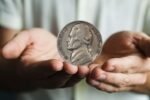
Q: What should I do if I think I’ve found a very rare coin?
A: Research first. Compare it closely to authenticated examples online. Do not clean or polish it, as this can drastically reduce its value. If you believe it may be authentic and valuable, consider submitting it to PCGS or NGC for grading and authentication.
Q: Is coin collecting a good investment?
A: While some coins appreciate in value, collecting should first and foremost be driven by passion and interest. The market can fluctuate. Treat it as a rewarding hobby with potential financial benefits, rather than a pure investment strategy.
Q: How can I learn more about coin collecting?
A: Join a local coin club, attend coin shows, and utilize resources from the American Numismatic Association (ANA). Reputable price guides and numismatic publications are also excellent educational tools.
Conclusion
The world of Washington quarters is a captivating intersection of history, art, and science. From the iconic first issues of the 1930s to the intriguing errors that slipped through the mint’s quality control, each coin has a story to tell. Whether you’re meticulously building a complete set or simply enjoying the thrill of checking your change, this series offers endless opportunities for discovery. By understanding what makes a quarter rare, learning to assess condition, and knowing the key dates to watch for, you transform everyday pocket change into a portal to the past and a potential treasure trove for the future.
