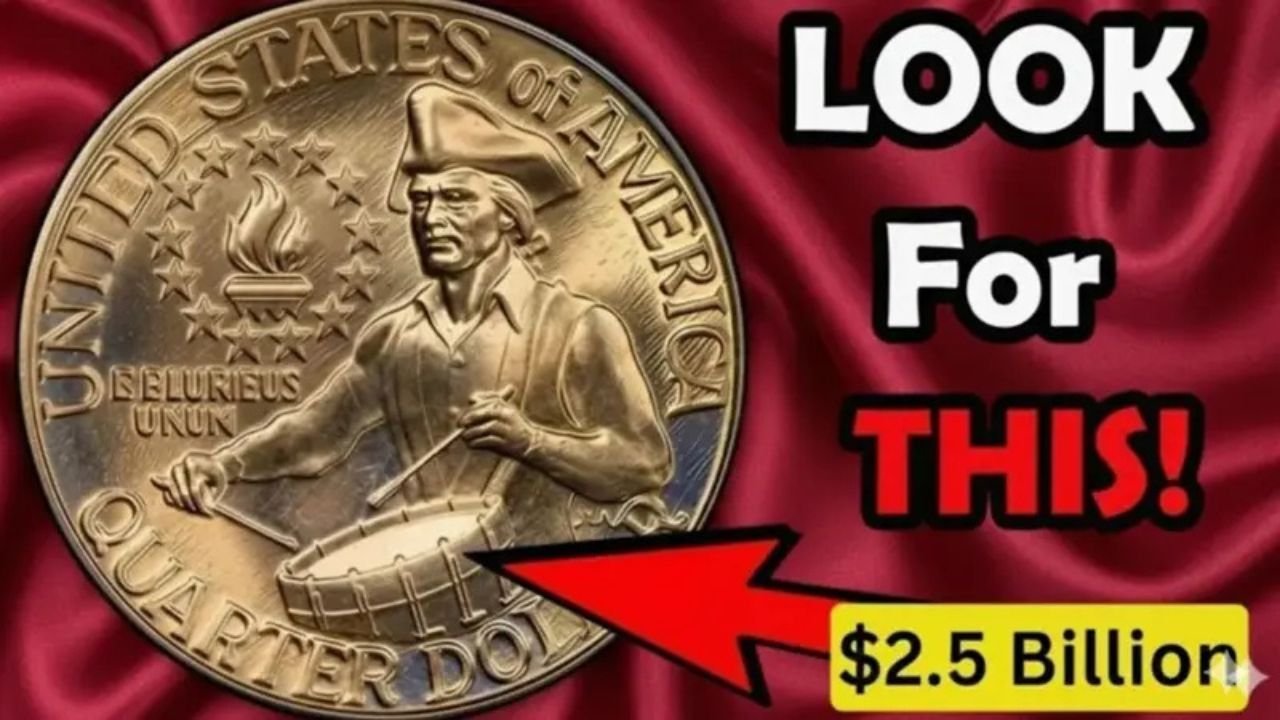
1976 Bicentennial Quarters : Every so often, a piece of everyday pocket change can offer a tangible link to a national celebration. The 1976 Bicentennial quarter, with its distinctive colonial drummer design, is one such piece. Minted to honor the 200th anniversary of the United States, over a billion of these coins entered circulation, making them a common find for decades. While most are indeed just worth twenty-five cents, a combination of minting anomalies and exceptional preservation has created a fascinating niche for collectors. This guide explores the history, key varieties, and practical steps for identifying which of these ubiquitous quarters might hold a hidden premium.
The Historical Context A Nation’s Birthday Coin
In the early 1970s, as the nation approached its bicentennial, Congress authorized a special redesign for the quarter, half dollar, and dollar coin. For the quarter, sculptor Jack L. Ahr’s design of a colonial drummer boy alongside a victory torch encircled by thirteen stars was selected. This marked a temporary departure from the familiar eagle reverse. All quarters struck in 1975 and 1976 bear the dual date “1776–1976,” making them instantly recognizable. The Philadelphia (no mint mark) and Denver (“D” mint mark) facilities produced the copper-nickel clad coins for general circulation, while the San Francisco Mint struck 40% silver versions exclusively for collector sets. The immense production run was a success in terms of public engagement, but the sheer volume and pace of minting also led to the errors that collectors prize today.
Identifying Value in a Common Coin
The vast majority of Bicentennial quarters in circulation are worth face value. Their collectibility springs from two main factors: condition and minting errors. A coin that escaped heavy wear, retaining its original luster and sharp details, is always more desirable. However, the true stars for modern hunters are the errors. These are accidental varieties that slipped through quality control, including doubled elements, off-center strikes, or planchet imperfections. Because they were unintentional and are relatively scarce, they carry significant numismatic interest and value, even in well-circulated condition.
Notable Varieties and Errors to Seek
Patient collectors still discover intriguing Bicentennial quarter errors in circulation. Here are some of the most sought-after types:
- Doubled Die Obverse: This error occurs when a misalignment in the die-hubbing process creates a visible doubling of the design elements. On Bicentennial quarters, look for a shadowing or doubling effect on the inscriptions like “IN GOD WE TRUST” or the date. The most notable examples are from the Denver mint.
- Off-Center Strikes: These coins were misaligned when the blank planchet was struck, resulting in part of the design being missing and a crescent-shaped blank area on the coin. The value increases with the percentage of the off-center shift.
- Clipped Planchets: If the metal sheet from which blank planchets are punched overlaps a previous hole, it results in a curved clip. These coins have a distinctive, crescent-moon-shaped missing section on their edge.
- Filled or Weak Mint Marks: Sometimes grease or debris clogged the mint mark cavity in the die, resulting in a “D” or “S” that is faint, distorted, or completely missing. This is a minor error but still collectible.
Comprehensive Value Reference Table
| Variety / Error Type | Key Identification Features | Estimated Value (Circulated) | Estimated Value (Certified High Grade) |
|---|---|---|---|
| Doubled Die Obverse (DDO) | Noticeable doubling on lettering or date, esp. Denver coins. | $150 – $500 | $1,000 – $10,000+ |
| Off-Center Strike | Design is shifted, leaving a blank crescent area. | $100 – $400 | $500 – $2,000+ |
| Wrong Planchet | Wrong metal composition or weight (e.g., struck on a dime planchet). | $500+ | $5,000+ |
| Filled Mint Mark | “D” or “S” mint mark is weak, blob-like, or absent. | $50 – $200 | $300+ |
| Clipped Planchet | Curved missing section on the coin’s edge. | $50 – $150 | $200+ |
| Brilliant Uncirculated (No Error) | Full original luster, no wear, sharp strike. | $1 – $5 | $50 – $400+ (MS67 or higher) |
A Practical Guide for Examination
You don’t need to be an expert to start looking. Follow these simple steps:
- Use Magnification: A basic 5x-10x loupe or magnifying glass is essential for inspecting details like doubling or mint mark anomalies.
- Check the Edge: Look for clips or irregular shapes. A standard quarter has a reeded edge.
- Feel the Weight: A standard copper-nickel quarter weighs 5.67 grams. Any significant deviation could indicate a wrong planchet error.
- Assess Condition: Look for signs of wear on the drummer’s arms and face, or on Washington’s hair. Less wear means higher potential value.
- Handle with Care: Always hold a coin by its edges to preserve its surface. Never clean or polish a coin, as this permanently destroys its collectible value.
Frequently Asked Questions (FAQ)
Q: Are all 1976 Bicentennial quarters valuable?
A: No. The overwhelming majority found in change are common and worth only 25 cents. Value is derived from specific errors or exceptionally high grades.
Q: How can I tell if my Bicentennial quarter is silver?
A: The circulating versions are copper-nickel clad and have a distinct copper band visible on the edge. The 40% silver versions, struck only at the San Francisco Mint for sets, have a solid silver-white edge with no copper stripe. They were not released into circulation.
Q: Is a “no mint mark” quarter from Philadelphia valuable?
A: In circulated condition, a standard Philadelphia quarter (no mint mark) is common. Value for any mint only arises from high grades (MS67 and above) or the presence of a notable error.
Q: Should I get my coin graded?
A: Professional grading (by services like PCGS or NGC) is recommended if you suspect you have a high-value error or an exceptionally well-preserved coin. Grading authenticates the coin, confirms the error, and encapsulates it to preserve condition, which typically maximizes its market value.
Q: Where is the best place to look for these quarters?
A: Searching through rolls of quarters obtained from banks, examining old coin jars, or attending local estate sales can be fruitful. Patience is key.
Final Reflections
The 1976 Bicentennial quarter is more than just spent currency; it is a miniature monument to a national milestone. While finding a rare error is a thrilling possibility, the real joy for many is the act of looking—connecting with history through an object that passed through countless hands. Whether you discover a common piece for your pocket or a rare error for your collection, each Bicentennial quarter carries a story of America’s 200th birthday, making the search a rewarding pursuit in itself.
