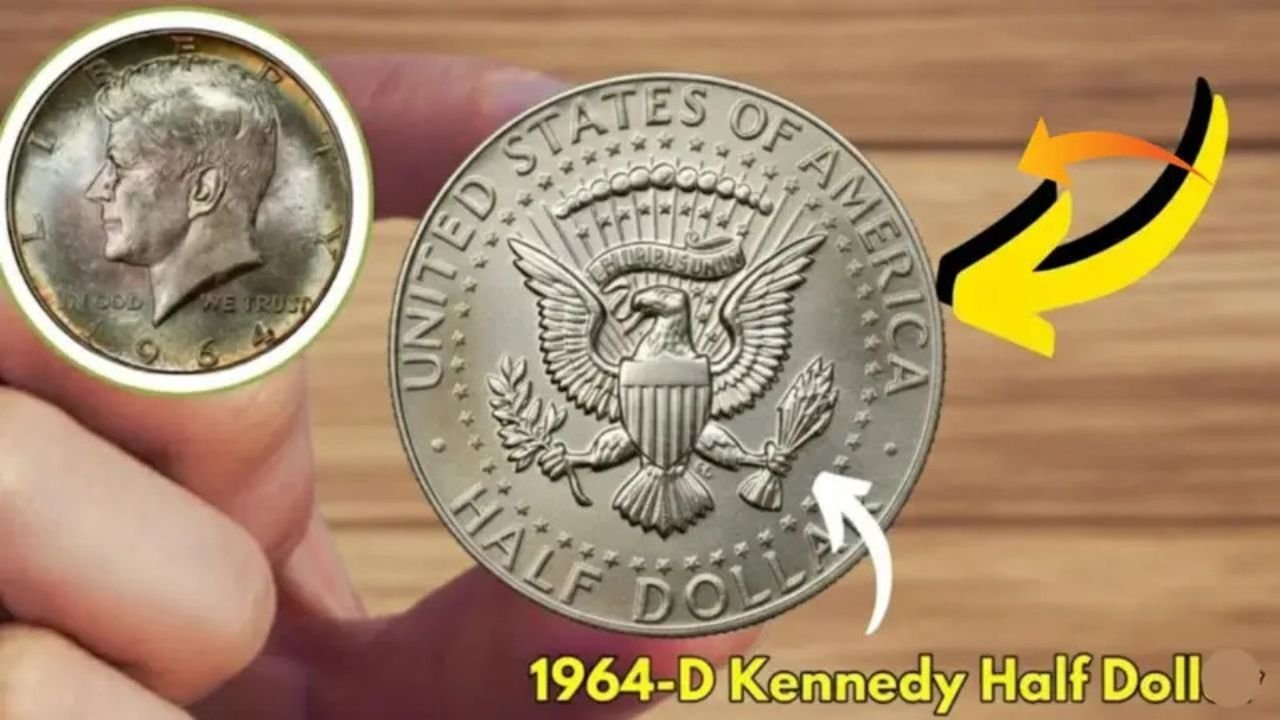
Different Silver Kennedy Half Dollar : The introduction of the Kennedy half dollar in 1964 stands as one of the most poignant moments in American coinage. Created in the wake of President John F. Kennedy’s tragic assassination, this coin transformed from a simple piece of currency into a national token of grief and remembrance. The public’s immediate and heartfelt response—hoarding the coins as personal memorials—not only removed them from daily circulation but also ignited a new chapter in coin collecting. This era saw collectors shift their focus from searching pocket change to deliberately seeking out subtle design variations and scarce mintages, forever changing the landscape of the hobby.
The Evolution from Precious Metal to Modern Alloy
Driven by a nation’s desire to honor its fallen president, the Kennedy half dollar was authorized with remarkable speed. The design, featuring Gilroy Roberts’ solemn obverse portrait and Frank Gasparro’s heraldic eagle reverse, was an instant symbol. Struck in 90% silver for its first year, the coin was met with unprecedented public demand, leading to a widespread shortage. This, combined with the rising market price of silver, forced a fundamental change. From 1965 through 1970, the coin’s composition was altered to a 40% silver-clad format. By 1971, the transition was complete, and circulating Kennedy halves were made from a copper-nickel blend, marking the definitive end of silver in everyday American coinage. This journey from precious to base metal, shaped by both sentiment and economics, defines the key periods for collectors today.
Key Silver Kennedy Half Dollars A Collector’s Guide
The value and interest in silver Kennedy halves are driven by specific, notable issues. The table below outlines the most significant varieties that collectors seek.
Silver Kennedy Half Dollar Key Dates & Varieties
| Year & Variety | Key Characteristics | Silver Content | Mintage | Estimated Value (Circulated) | Estimated Value (Mint State/Proof 65+) |
|---|---|---|---|---|---|
| 1964 (P & D) | The first year of issue, widely saved by the public. | 90% Silver | ~277 million | $10 – $15 | $30 – $100 |
| 1964 Accented Hair Proof | Deeper hair detail above ear; broken “I” in LIBERTY. Proofs only. | 90% Silver | Est. 1-3% of proof mintages | N/A (Proof Only) | $2,000 – $20,000+ |
| 1964 Special Mint Set (SMS) | Distinct satin finish; experimental issue. | 90% Silver | Unknown, Very Low | N/A (Set Only) | $3,000 – $10,000+ |
| 1970-D | Lowest mintage circulation strike; only available in mint sets. | 40% Silver | 2,150,000 | $20 – $25 | $300 – $1,500+ |
| 1964 Doubled Die Obverse | Noticeable doubling on date and inscriptions. | 90% Silver | Very Low | $200 – $500+ | $1,500 – $5,000+ |
What Makes a Kennedy Half Dollar Valuable?
Several interconnected factors determine the market value of these coins, moving them beyond their face or melt value.
- Condition and Preservation: As with all coins, state of preservation is critical. A coin in flawless, uncirculated (Mint State) or proof condition is worth exponentially more than one showing wear. Professional grading by services like PCGS or NGC provides a reliable benchmark for condition and authenticity.
- Metallic Composition and Intrinsic Value: The silver content provides a foundational value. A 90% silver 1964 half dollar has a higher inherent melt value than a 40% silver coin from 1965-1970. This base value often supports the price of even common-date circulated examples.
- Rarity and Mintage Figures: Official mintages tell only part of the story. Coins like the 1970-D have low official numbers, while others, like the 1964 Accented Hair, are rare due to a short production period within a larger mintage. Survival rates—how many coins exist today in collectible condition—are equally important.
- Errors and Varieties: The hunt for minting mistakes and design modifications is a major pursuit. Dramatic errors like the 1964 Doubled Die Obverse or subtle varieties like the missing designer initials on some later coins can transform a common issue into a prized find.
Noteworthy Varieties That Captivated Collectors
Certain issues within the Kennedy series demonstrated that modern coins could possess the intrigue and scarcity of classic numismatics.
- The 1964 Accented Hair Proof: This variety is the crown jewel for many collectors. The initial proof dies featured unusually strong definition in Kennedy’s hair, creating a distinct look. This design was softened within months, making the earlier “Accented Hair” proofs a scarce and highly desirable subset.
- The Enigmatic 1964 Special Mint Set (SMS): In 1965, the U.S. Mint paused proof set production. Instead, they issued “Special Mint Sets” with a unique satin finish. The 1964-dated coins included in these sets are mysterious, with an unknown origin story, and are exceptionally rare, especially in high grades.
- The 1970-D Key Date: With a mintage of just over 2 million, the 1970-D half dollar is the undisputed low-mintage key of the series for circulation strikes. Its exclusivity to that year’s mint set created instant collectibility, proving that modern coins could be legitimately scarce.
- The 1964 Doubled Die Obverse: A clear and dramatic example of a minting error, this variety shows pronounced doubling on the obverse lettering and date. It is a classic error that appeals to both Kennedy specialists and variety collectors.
- The Clad-Era Connection: 1972-D No FG: This variety, where the designer’s initials (FG) are missing from the reverse due die polishing, illustrates that the meticulous examination popularized by the silver-era varieties applies to the entire series.
The Enduring Influence on Coin Collecting
The story of the silver Kennedy half dollar fundamentally reshaped American numismatics. The act of public hoarding severed the coin’s connection to everyday commerce, making collectors rely on intentional acquisition from banks, dealers, and mint sets. Landmark varieties taught a generation to examine every coin closely, a practice known as “cherrypicking.” Furthermore, the shift from silver to clad sparked enduring conversations about a coin’s material worth versus its historical and collectible value, themes that remain central to the hobby.
Starting Your Own Collection
Building a collection of Kennedy half dollars can be a rewarding journey into modern history. Here are some pathways to begin:
- Search Bank Rolls: While finding 90% silver is rare, 40% silver halves (1965-1970) still occasionally appear. Look for coins with a distinctive silver-colored edge showing a thin copper line in the center.
- Focus on Varieties: Acquire a magnifying loupe and learn the markers for key varieties like the Accented Hair or Doubled Die. The hunt can be as exciting as the find.
- Consider Certified Coins: For key dates and high-value varieties, purchasing coins already graded and encapsulated by NGC or PCGS offers security and ensures quality.
- Set a Manageable Goal: A complete date and mint mark set of the silver years (1964-1970) is an excellent and historically rich objective for any collector.
Conclusion
The Kennedy half dollar series, born from tragedy and adapted through economic reality, represents a unique bridge between national history and personal collecting. These coins are more than metal; they are preserved memories that taught the public to see their currency in a new light. From the deeply saved 1964 issues to the elusive varieties that followed, the silver Kennedy halves rewrote the rules for collecting modern coinage, emphasizing careful study and passionate pursuit. They remain powerful reminders that history is often found in the palm of your hand.
Frequently Asked Questions (FAQ)
Q: How can I tell if my Kennedy half dollar is silver?
A: Check the year and edge. All 1964 Kennedy halves are 90% silver. Coins dated 1965-1970 are 40% silver and have a distinctive edge where you can see a copper core sandwiched between silver-colored layers. Coins dated 1971 and later (for circulation) have a uniform copper-nickel color on the edge with no silver band.
Q: What is the most valuable Kennedy half dollar?
A: The most valuable are high-grade examples of key varieties. This includes top-tier graded specimens of the 1964 Accented Hair Proof, the ultra-rare 1964 Special Mint Set (SMS) coin, and perfect examples of the 1970-D. Values for these can reach into the tens of thousands of dollars.
Q: Is it worth keeping Kennedy half dollars?
A: Absolutely. Even circulated 1964 halves have a silver value significantly above face value. All 1965-1970 halves also carry a premium for their 40% silver content. Beyond silver value, many dates and conditions have collectible value.
Q: What does “Accented Hair” mean on a 1964 Kennedy half?
A: It refers to a very early proof die state where the details in Kennedy’s hair, particularly above his ear and along his part, are much more deeply defined and pronounced. The bottom serif of the “I” in “LIBERTY” is also often broken. This variety is found only on proof coins from early in 1964.
Q: Where is the mint mark on a Kennedy half dollar?
A: For all silver Kennedy halves (1964-1970), the mint mark (“D” for Denver, “S” for San Francisco proofs) is located on the obverse (the head side), just below the point of Kennedy’s neck cut-off. In 1968, mint marks moved to the obverse for all denominations.
