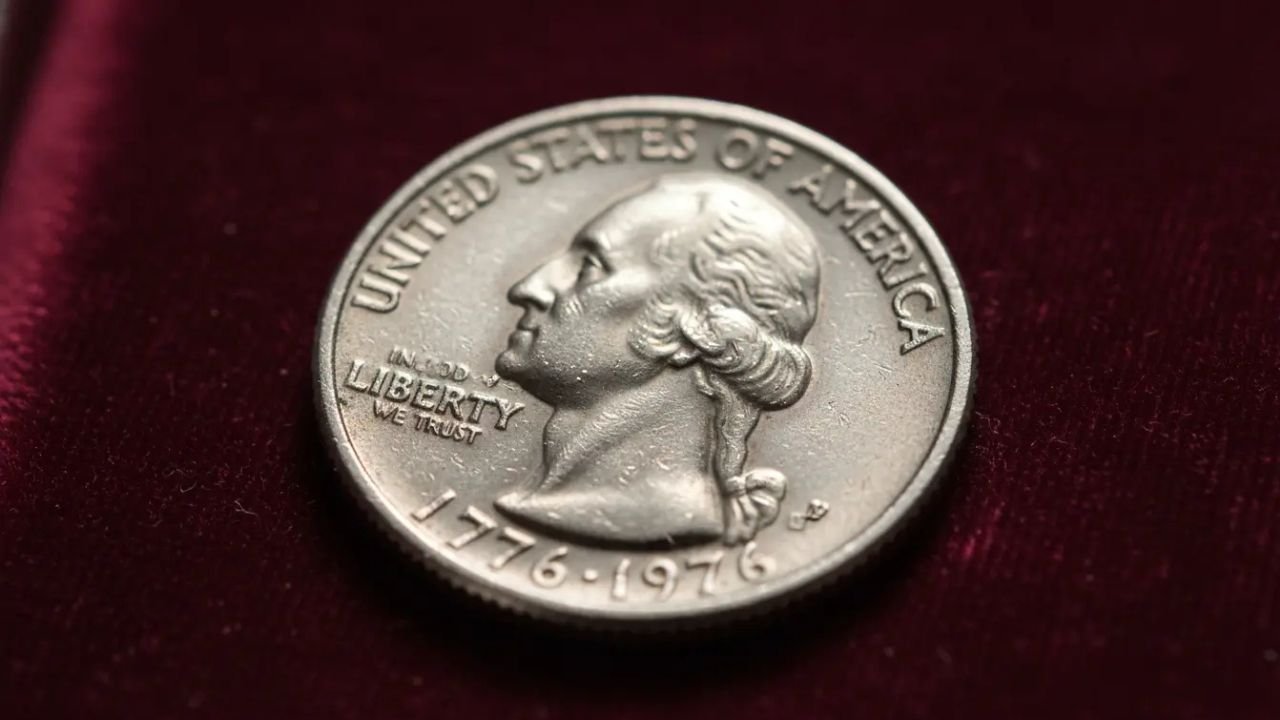
1976 Bicentennial Quarter : The story of a 1976 Bicentennial Quarter being worth a life-changing sum of money is one that captures the imagination. While the vast majority of these commemorative coins, celebrating America’s 200th anniversary, are worth only face value, the world of coin collecting does hold room for extraordinary exceptions. This guide aims to separate fact from fiction, providing a clear and honest path for identifying the rare specimens that truly hold significant collector interest.
Understanding the Bicentennial Quarter’s Background
First issued in 1975 and continued through 1976, the Bicentennial quarter was part of a special series that included the half dollar and dollar coin. Its distinguishing feature is the dual date “1776-1976” on the obverse (heads side) and a dramatic colonial drummer reverse (tails side) designed by Jack L. Ahr. With over 1.6 billion quarters minted for circulation across Philadelphia (no mint mark), Denver (D mint mark), and San Francisco (S mint mark), their abundance is precisely why ordinary examples remain common. True value arises not from the design itself, but from specific, verifiable anomalies and compositions that escaped the mint in minute numbers.
1976 Bicentennial Quarter Reference Table
| Feature | Details | Potential Impact on Value |
|---|---|---|
| Standard Composition | Copper-nickel clad layers over a copper core. | Face value (25¢) for worn circulated examples. |
| Special Composition | 40% silver (clad layers of silver-copper). Minted in San Francisco (S mint mark) for proof sets. | Moderate premium ($5-$15+), depending on grade and condition. |
| Mint Marks | None (Philadelphia), D (Denver), S (San Francisco). The ‘S’ mint mark appears on both copper-nickel and 40% silver proofs. | Mint mark alone does not create high value. ‘S’ silver proofs are most valuable of standard issues. |
| Key to High Value | Major Mint Errors (wrong planchet, dramatic off-centers), Perfect Condition Grades (MS/PR 70), and Verified Unique Patterns. | Only such exceptional, authenticated specimens can command prices over $1,000, with unique errors reaching into the tens of thousands at auction. |
| Realistic Maximum | At public auction, the most valuable 1976 quarters (severe errors in high grade) have sold in the $10,000 – $35,000 range. | Stories of “millions” refer to one-of-a-kind U.S. patterns or trial pieces from other eras, not circulation-struck Bicentennial quarters. |
| First Action to Take | Carefully examine, do not clean, photograph thoroughly, and consult official price guides or online auction archives for comparison. |
A Methodical Approach to Examination
Before considering value, one must first become a careful observer. Start by confirming you have a Bicentennial quarter: look for the dual date and the drummer boy reverse. Next, identify the mint mark, located on the obverse just above the date near Washington’s hairline. This initial identification forms the foundation for further research.
The most promising candidates for value typically fall into two categories: exceptional condition or dramatic errors. A perfectly preserved, professionally graded coin from the San Francisco Mint’s 40% silver proof sets can be worth a modest premium to collectors. However, the legends of million-dollar valuations are almost exclusively tied to monumental mint errors—mistakes so severe and unique that the coin becomes a one-of-a-kind artifact of the minting process.
Recognizing Extraordinary Mint Errors
For a modern coin to approach valuations in the high thousands or beyond, it must possess an error that is undeniable, dramatic, and professionally authenticated. These are not minor imperfections, but striking irregularities. Key types to look for include:
- Off-Center Strikes: The coin’s design is dramatically misaligned, leaving a large, blank crescent of the blank planchet visible.
- Wrong Planchet Errors: The coin was struck on a blank intended for another denomination (like a dime or nickel planchet), resulting in a radically different size, edge, or metal composition.
- Major Double Dies: A duplication of design elements caused by a misaligned die during the hubbing process; this must be distinct and severe, not mere machine doubling.
- Broken Die Errors: Coins showing dramatic, raised lines or lumps of metal caused by a fractured die.
- Experimental or Pattern Coins: Extremely rare pieces struck in unusual metals or with different designs as tests; these are almost never found in circulation and reside primarily in institutional collections.
If you suspect you have such an error, the cardinal rule is to never clean the coin. Cleaning permanently damages the surface and obliterates its numismatic value. Instead, place it in a protective holder and document it with clear, high-resolution photographs of both sides and the edge.
The Essential Step of Professional Authentication
For any coin that exhibits these rare characteristics, professional grading and authentication are non-negotiable. Reputable third-party services like the Professional Coin Grading Service (PCGS) or Numismatic Guaranty Company (NGC) provide expert verification. They will confirm the error’s authenticity, assess the coin’s condition on a standardized scale, and encapsulate it in a sonically sealed holder. This “slab” is the marketplace’s seal of trust, transforming an interesting find into a legitimate asset that can be insured or sold at auction.
Frequently Asked Questions (FAQ)
Q1: Is every 1976 quarter worth money?
A1: No. The overwhelming majority of the billions minted are worth only 25 cents if worn from circulation. Uncirculated or proof examples have modest collector value, often between $1 and $15.
Q2: How can I tell if my Bicentennial quarter is 40% silver?
A2: The simplest test is the edge. A copper-nickel clad quarter has a distinct copper-colored stripe on its edge. A 40% silver coin’s edge will appear a solid, silvery white without the copper band. These were only sold in special mint sets and were not released into general circulation.
Q3: I see a “double” image on my coin. Is it valuable?
A3: It depends. Many coins show “machine doubling,” a flat, shelf-like distortion that adds little to no value. A true “double die” error shows clear, distinct separation and doubling of the lettering or design elements and must be authenticated. When in doubt, have it evaluated by an expert.
Q4: Where is the best place to sell a rare coin I’ve found?
A4: For a coin you believe is genuinely valuable, start by getting it professionally graded. Once authenticated and encapsulated, you can consign it to a major numismatic auction house, sell it through a reputable coin dealer, or list it on a trusted online marketplace for certified coins.
Q5: Why do some articles mention values of $4 million or more?
A5: These claims are sensationalized and typically conflate the common Bicentennial quarter with unique U.S. Mint patterns or trial pieces from history, or with unverified online hoaxes. No 1976 Washington quarter has ever sold for anything close to $1 million. Responsible collecting is based on verified sales data and professional authentication.
The search for a rare coin is a fascinating journey into history and craftsmanship. While the dream of finding a multimillion-dollar quarter in your pocket change is just that—a dream—the process of learning, examining, and appreciating the nuances of coinage can be its own rich reward. By focusing on knowledge and verification, collectors engage in a hobby built on genuine discovery and historical preservation.
